A control room is where people monitor systems, respond to alerts, make decisions, and manage operations that often cannot afford delays. In such environments, the control room console is more than a workstation. It becomes part of the operator’s everyday working environment.
From SOC and NOC facilities to airports, defence, power plants, oil and gas facilities, and other critical infrastructure, choosing the right console can make a noticeable difference in comfort, efficiency, and long-term usability.
But what should you actually look for when selecting a control room console? Here are some important factors to consider.
Understand the Operational Requirements
Every control room has a different purpose. An airport ATC facility has different requirements from a security operations centre or an industrial control room.
Before selecting a console, consider the type of operation, number of operators, monitoring requirements, working hours, equipment used, and available floor space. Understanding these requirements helps create a workspace that supports the actual job rather than simply filling the room with furniture.
A well-planned control room console should allow operators to access the equipment and information they need without unnecessary movement.
Focus on Operator Ergonomics
Operators may spend several hours at their consoles. Poorly designed workstations can lead to discomfort and fatigue, particularly during long shifts.
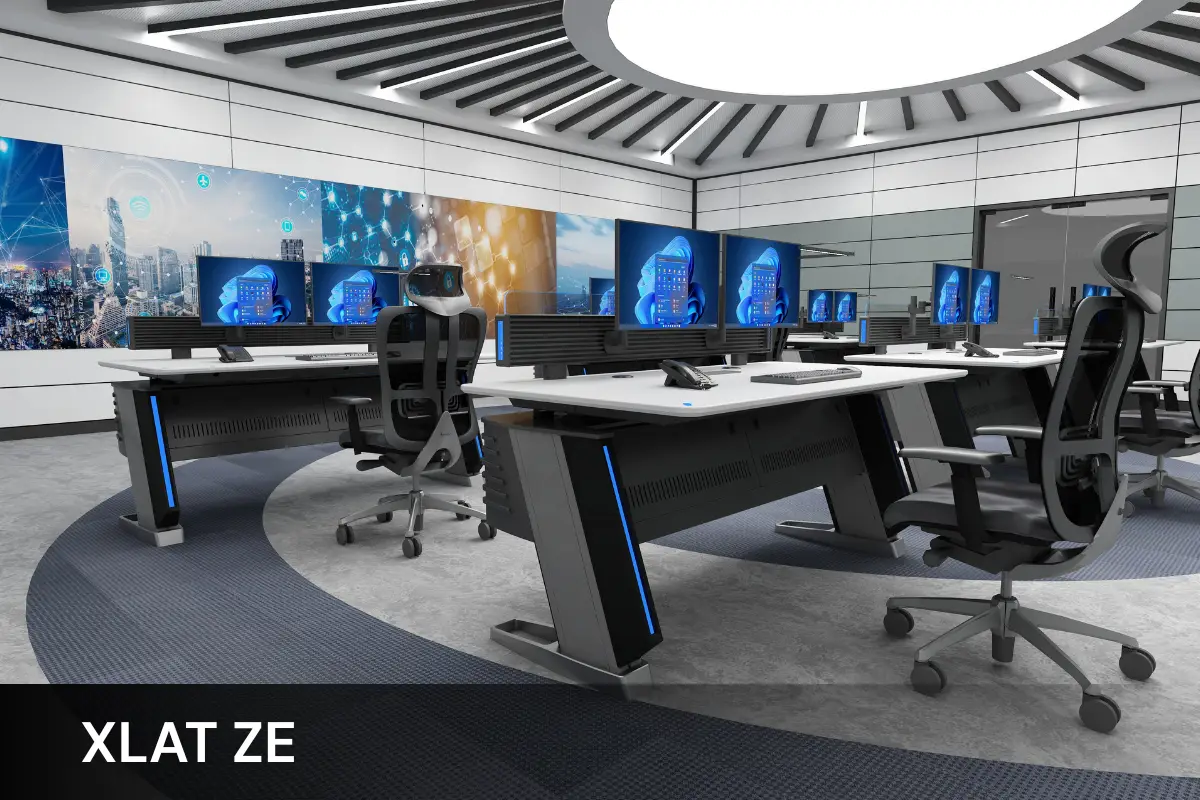
Ergonomics should therefore be considered from the beginning. Desk height, legroom, monitor positioning, keyboard and mouse placement, seating space, and overall reach should work together to create a comfortable workstation.
The goal is simple: operators should be able to remain focused on their responsibilities instead of constantly adjusting their workspace.
Consider Equipment and Technology Integration
Modern control rooms often contain multiple monitors, communication equipment, control devices, computers, and other operational hardware.
A suitable console should provide an organised way to accommodate this equipment while keeping the operator’s workspace practical. Cable management is also important. Proper routing helps maintain a clean appearance and makes future maintenance easier.
Instead of adding equipment after installation, technology requirements should be considered during the control room design stage.
Plan for Different Shifts and Users
Control rooms often operate continuously, meaning different operators may use the same workstation throughout the day.
This makes flexibility particularly important. A good console design should support different operators and allow adjustments wherever required. Comfortable working conditions become even more valuable when employees work in rotating or extended shifts.
The right control room interior should create a professional environment without compromising the practical needs of the people working inside it.
Think About Long-Term Flexibility
Technology changes quickly. Equipment that is essential today may be replaced or upgraded in the future.
For this reason, a control room console should not be designed only around today’s requirements. Modular and adaptable approaches can make future modifications easier.
Planning for expansion, equipment replacement, and changing operational requirements can help reduce the need for major workspace changes later.
Match the Console to the Application
Different industries require different workspace approaches.
For example, ATC control room consoles need to support continuous monitoring and communication. Defence environments may require highly organised and mission-focused workspaces. SOC and NOC facilities can involve multiple operators monitoring different systems, while power and oil & gas control rooms may require workstations suited to industrial operations.
A professional manufacturer should therefore understand the application before recommending a console configuration.
Choose an Experienced Control Room Manufacturer
Selecting the right manufacturer is just as important as selecting the console itself. Look for experience in critical environments, attention to ergonomics, quality manufacturing, customisation capabilities, and the ability to understand your operational requirements.
At ONEPWS, control room workspaces are developed around the needs of operators and critical operations. With experience across industries and applications, ONEPWS provides engineered workspace solutions designed for demanding control room environments.
The company offers solutions for applications including SOC, NOC, ATC, defence, airports, power, oil & gas, and other critical operations.
About OnePWS
Since 2006, OnePWS (Formerly Pyrotech Workspace Solutions) has delivered over 450+ Control Rooms and 60,000+ Consoles to critical process industries. Specializing in turnkey control room solutions, design of ergonomic command centres, CCTV monitoring rooms and even setups resembling military control room precision, this company knows what works. Floor plans are engineered for real operator workflows, sightlines, safety norms, and flexibility. Lighting, acoustics, materials, climate, security all calibrated with experience from oil & gas, steel, power plants, aviation, smart city & surveillance sectors.
Frequently Asked Questions (FAQ)
What is a control room console?
A control room console is a purpose-built workstation designed for operators who monitor, manage, and control critical systems. It can be configured according to the operational and ergonomic requirements of the facility.
How do I choose the right control room console?
Consider the application, number of operators, working hours, equipment requirements, available space, ergonomics, cable management, and future expansion needs before selecting a console.
Which industries use control room consoles?
Control room consoles are commonly used in airports, defence facilities, SOCs, NOCs, power plants, oil & gas facilities, security operations, industrial plants, and other critical infrastructure environments.
Why is ergonomics important in a control room?
Operators may work for long periods or across multiple shifts. An ergonomic console can provide better working comfort and help operators maintain an efficient and focused workspace.
Can control room consoles be customised?
Yes. Control room consoles can be designed or configured according to factors such as room layout, operator requirements, equipment, number of users, and the specific application.