Modern industries are becoming smarter every day. From power plants and oil & gas facilities to airports and surveillance centers, operators rely on control rooms to monitor systems, respond quickly, and make informed decisions. As technology continues to evolve, simply purchasing individual products is no longer enough. Future control rooms require a complete, integrated approach where every element works together.
Many organizations still buy control room consoles, video walls, lighting, furniture, and room interiors from different vendors. While each product may perform well individually, they often fail to function as one unified workspace. This can lead to poor operator comfort, inefficient workflows, and higher maintenance costs.
The future belongs to integrated control room solutions that combine technology, ergonomics, and workspace design into one seamless environment.
The Problem with Isolated Control Room Procurement
A common mistake during control room development is treating every component as a separate purchase. Consoles are ordered from one supplier, interiors from another, lighting from a third, and technology from different system integrators.
Although this approach may appear cost-effective initially, it often creates operational challenges later.
Some common issues include:
- Poor cable management
- Limited space for future equipment
- Inconsistent workspace design
- Difficult maintenance
- Reduced operator comfort
- Compatibility issues between systems
In a mission critical control room, even small design issues can affect operator performance. Since these environments operate 24/7, every workstation should support quick access to information and efficient communication.
Why Operators Need Integrated Environments
Operators spend long hours monitoring data, communicating with teams, and responding to critical situations. Their workspace should help them stay focused instead of creating unnecessary distractions.
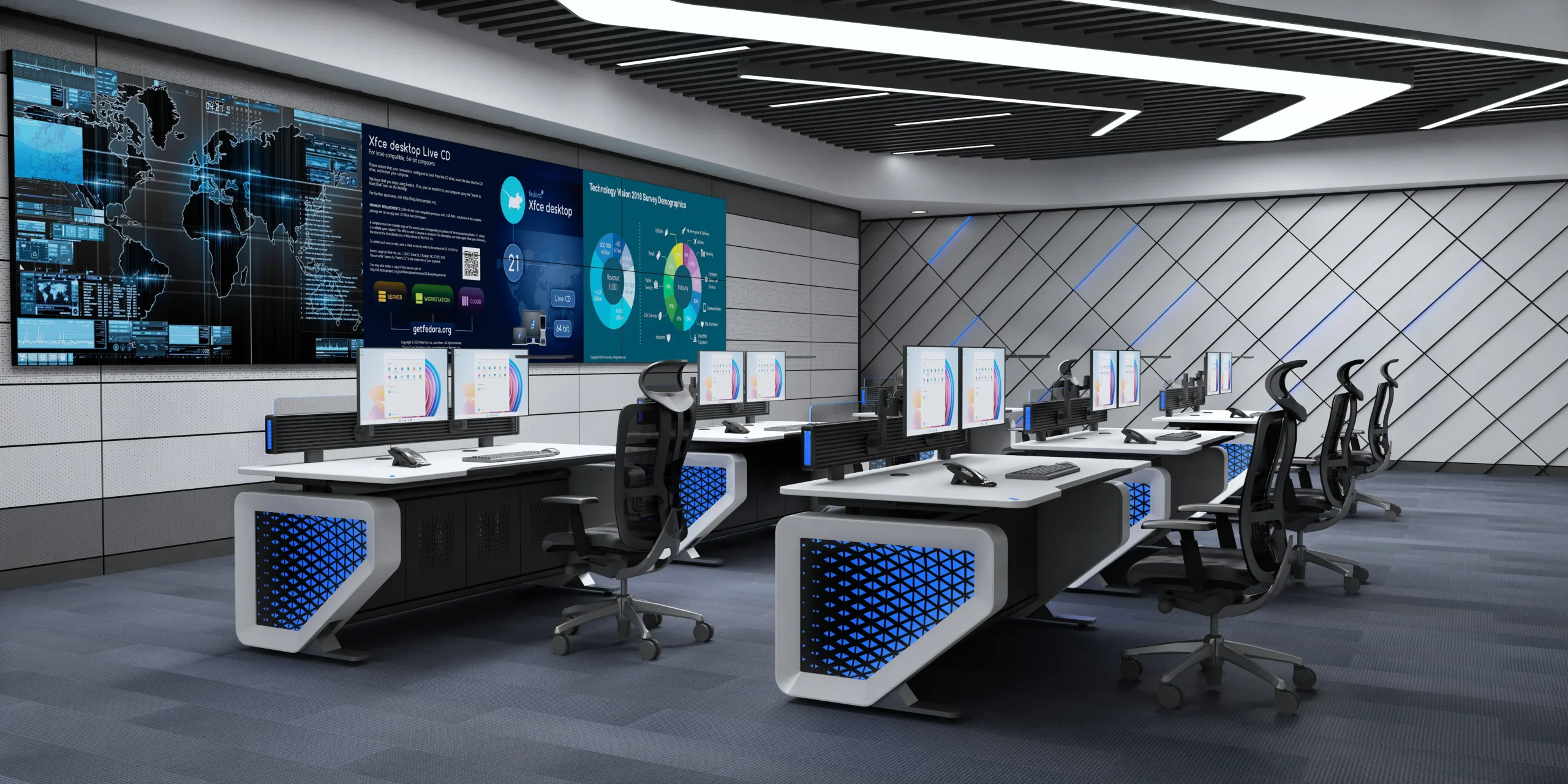
An integrated control room is designed around operator needs. Every element—from control room consoles to seating, monitor placement, lighting, and room layout—is planned together.
The benefits include:
- Better visibility across multiple screens
- Comfortable working posture
- Improved collaboration between operators
- Faster response times
- Reduced fatigue during long shifts
When every component works together, operators can concentrate on making decisions rather than dealing with workspace limitations.
Why Digital Twin and Visualization Need the Right Physical Environment
Many industries are adopting advanced technologies such as real-time monitoring, predictive analytics, and digital twin control room platforms. These technologies provide valuable insights, but they perform best when supported by a well-designed physical workspace.
Large displays, multiple monitors, and visualization systems require careful planning. If consoles are positioned incorrectly or sightlines are poor, operators may struggle to interpret information quickly.
An integrated workspace ensures that digital tools and physical infrastructure complement each other. Proper monitor positioning, ergonomic console layouts, lighting control, and workspace planning help operators make better use of digital technologies.
As control room automation continues to grow, physical workspace design becomes just as important as software and hardware.
Why Cybersecurity and Safety Must Be Designed into Control Rooms
Today’s control rooms manage highly sensitive operations. Whether monitoring power grids, industrial processes, transportation systems, or surveillance networks, security must be considered from the beginning.
Cybersecurity is no longer limited to software. Physical workspace design also plays an important role.
Integrated control rooms support better security by providing:
- Secure equipment placement
- Controlled access zones
- Organized cable routing
- Space for future technology upgrades
- Safe operator movement
- Reliable equipment layouts
Similarly, safety should never be an afterthought. Emergency access, ergonomic workstations, and proper workspace planning help create a safer environment for operators working around the clock.
How OnePWS Delivers Integrated Control Room Solutions
At ONEPWS, control rooms are designed as complete operational environments rather than a collection of individual products.
Instead of supplying only control room consoles, ONEPWS delivers integrated control room solutions that include:
- Ergonomic control room consoles
- Technical furniture
- Control room interiors
- Workspace planning
- Lighting and cable management
- Operator-centric layouts
- Future-ready infrastructure
This integrated approach helps organizations improve productivity, simplify maintenance, and prepare for future technologies.
With experience across industries such as oil & gas, power, airports, defence, surveillance, manufacturing, and utilities, OnePWS understands that every mission critical control room has unique operational requirements.
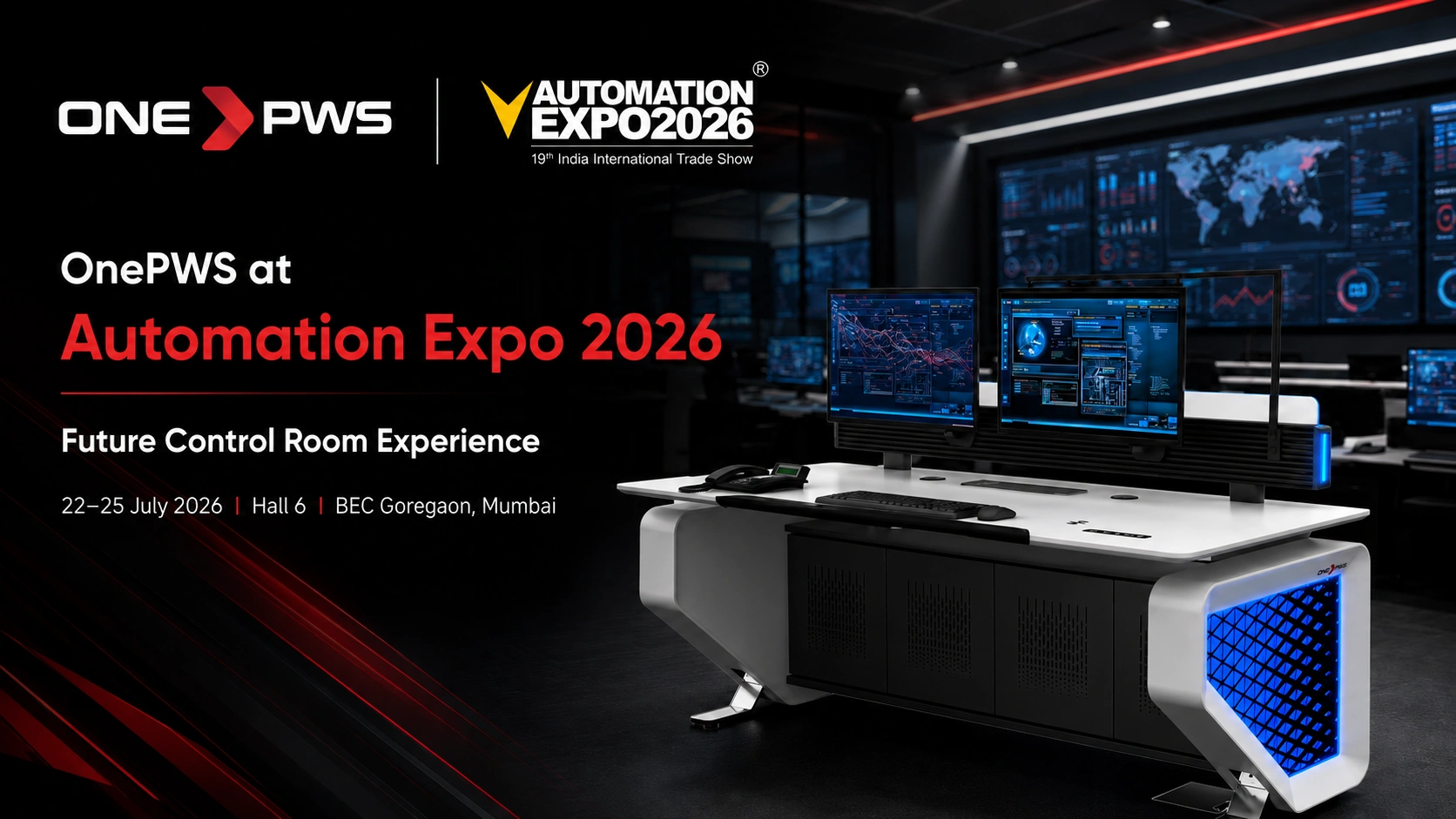
Visitors attending Automation Expo 2026 control room demonstrations will also have the opportunity to see how integrated workspace design can improve operational efficiency and support smarter industrial environments.
CONCLUSION
The future of control rooms is no longer about selecting the best individual products. It is about creating a connected environment where technology, ergonomics, safety, and workspace design work together.
Organizations investing in future control rooms should think beyond standalone consoles or furniture. An integrated design improves operator comfort, simplifies maintenance, supports control room automation, and prepares facilities for future digital transformation.
By combining ergonomic control room consoles, modern interiors, and operator-focused planning, ONEPWS delivers integrated control room solutions that help organizations build smarter, safer, and more efficient control rooms for years to come.
Frequently Asked Questions (FAQ)
What are integrated control room solutions?
Integrated control room solutions combine consoles, interiors, workspace planning, lighting, and supporting infrastructure into one coordinated design for improved operational efficiency.
Why are integrated control rooms better than separate products?
An integrated approach improves operator comfort, simplifies maintenance, supports future expansion, and ensures all workspace components work together efficiently.
What is a digital twin control room?
A digital twin control room uses virtual models and real-time data to monitor assets, simulate operations, and support faster decision-making.
Why is ergonomic design important in a mission critical control room?
Operators often work long shifts. Ergonomic consoles and well-planned layouts reduce fatigue, improve focus, and enhance productivity.
How does ONEPWS support future control rooms?
ONEPWS provides integrated control room solutions that include ergonomic control room consoles, technical furniture, workspace planning, and modern control room interiors designed for today’s and tomorrow’s operational needs.