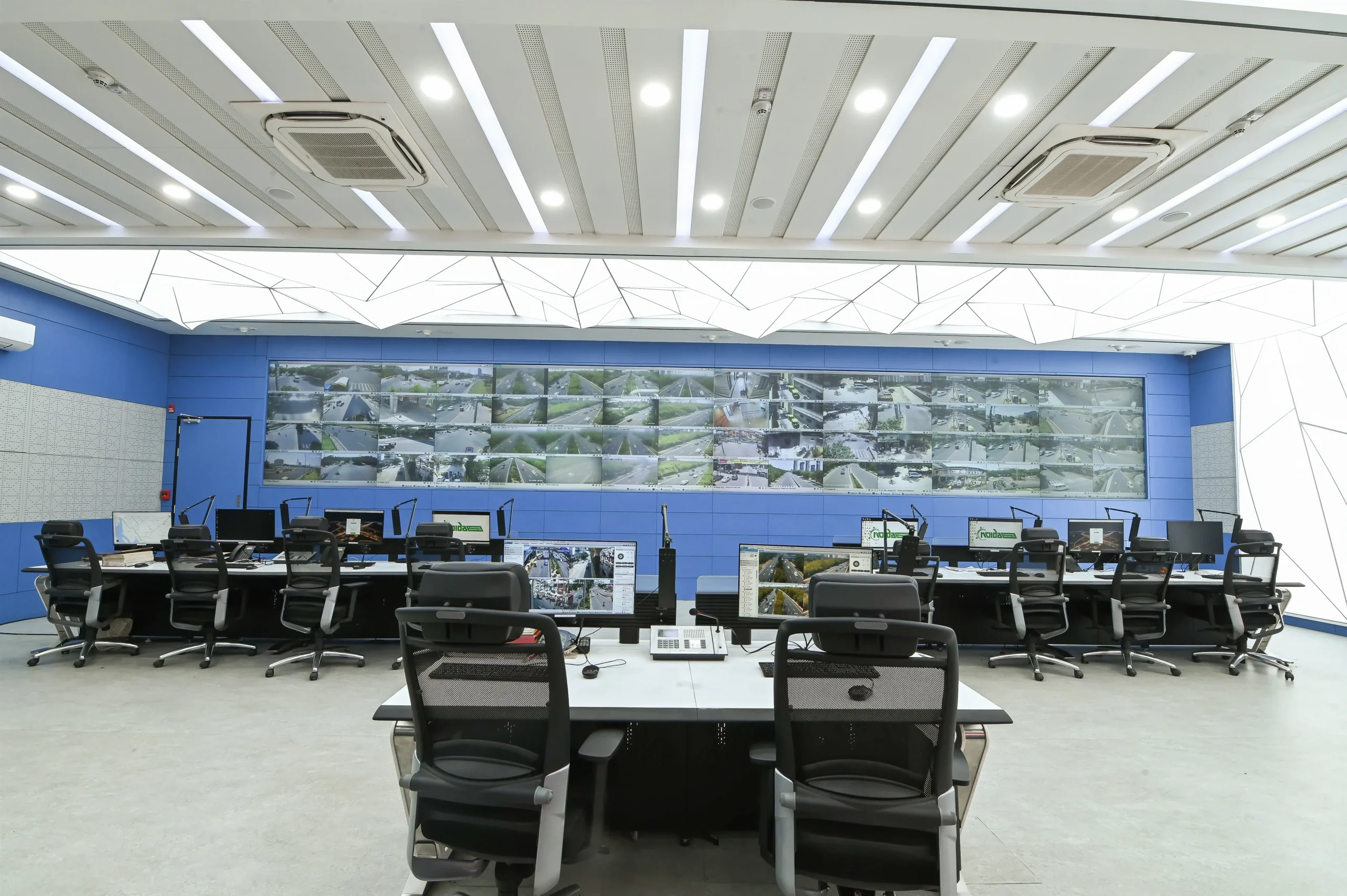
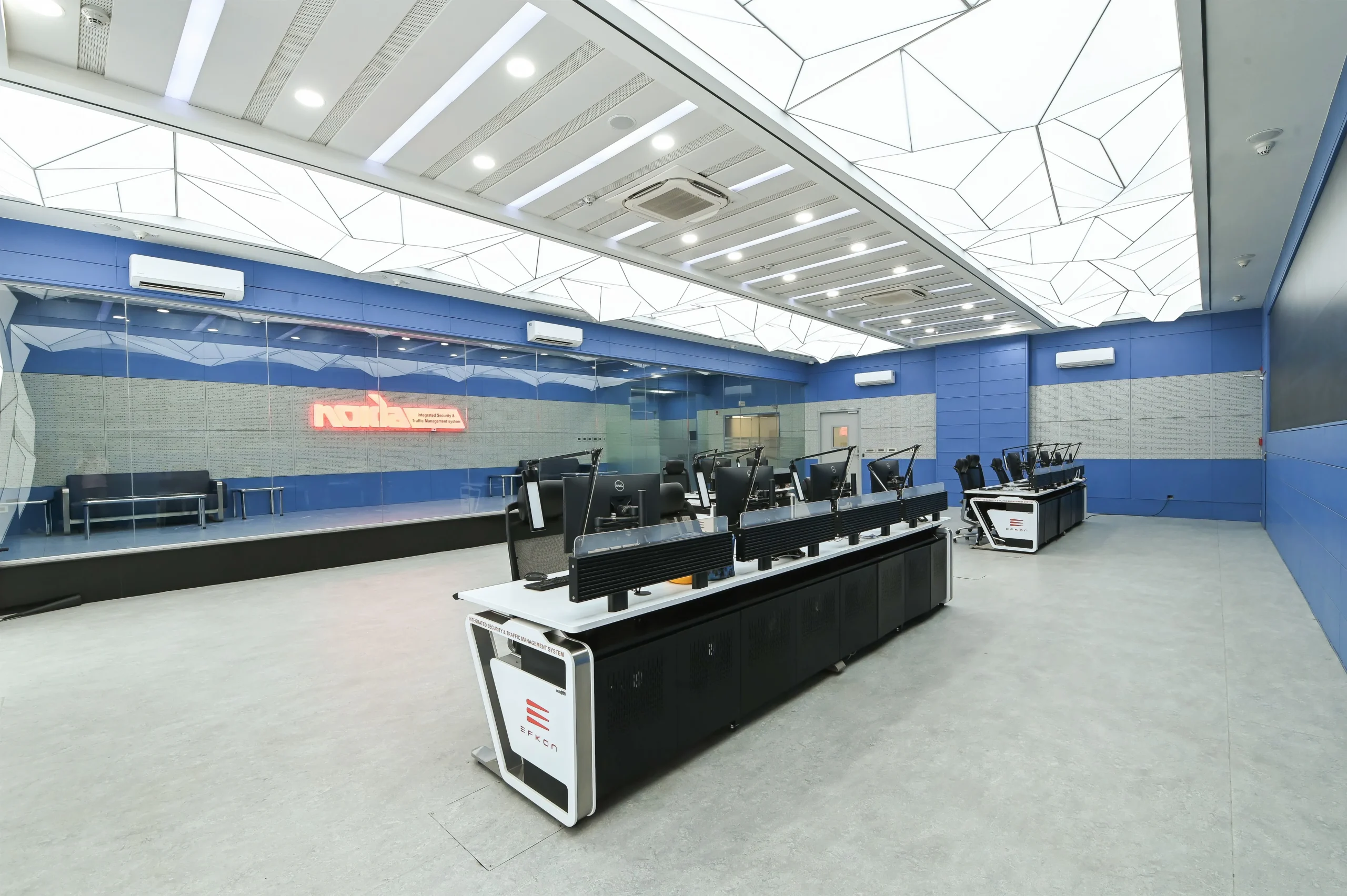
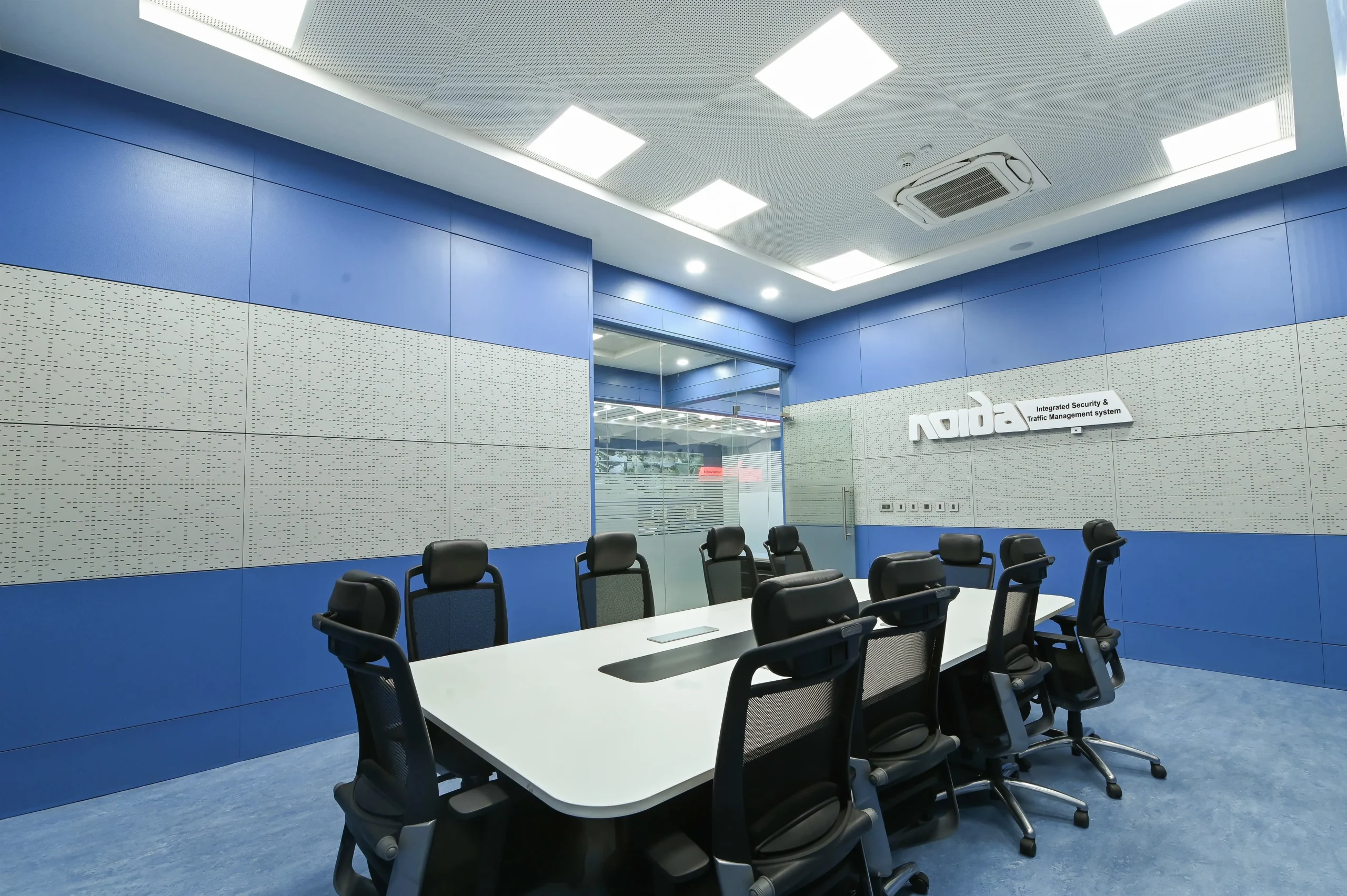
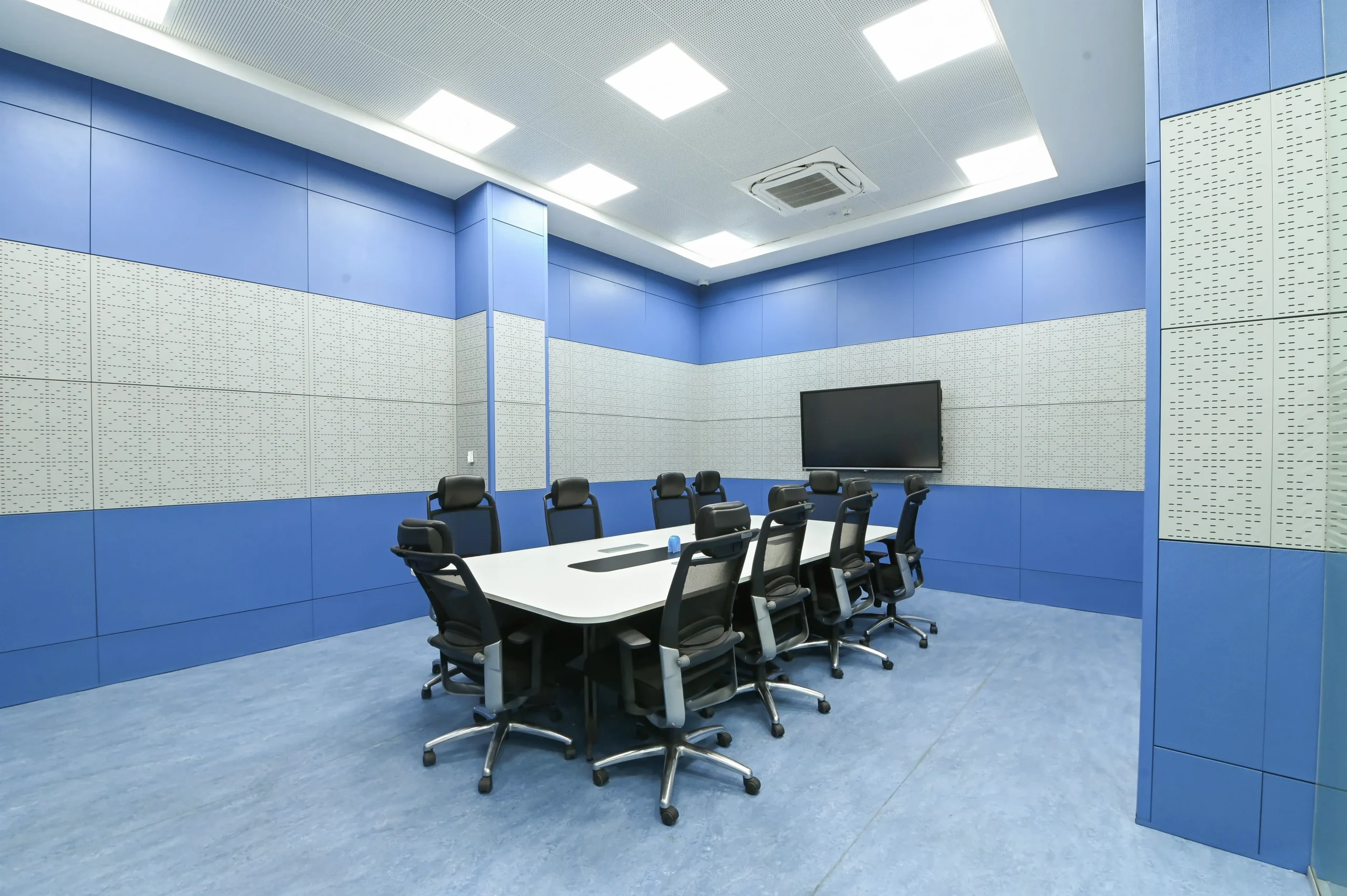
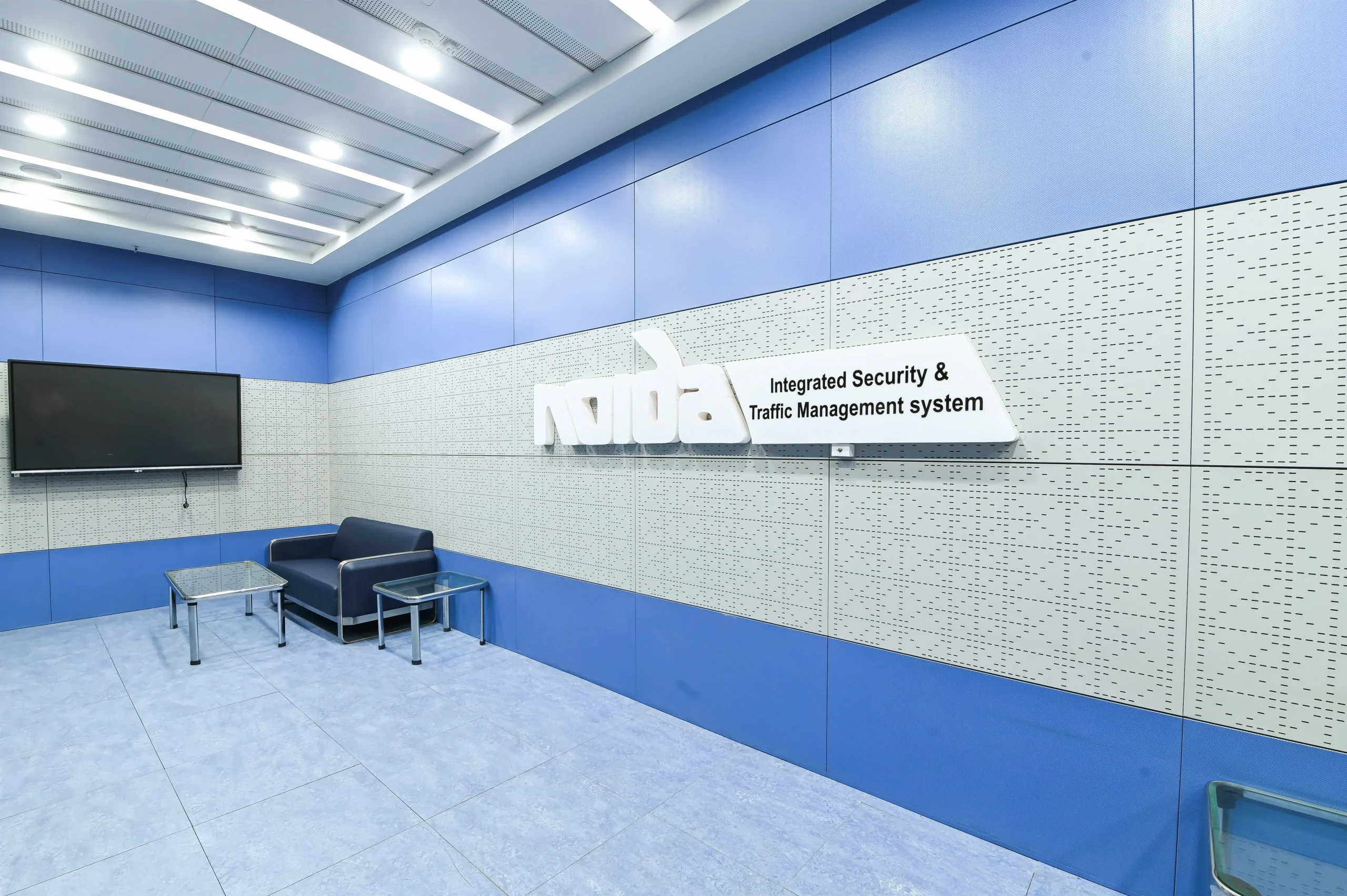
Noida ITMS Control Room

Multi-Dimensional Camera
1050
Intersections
80
Major Crossings
(Adaptive Signals)
30
Speed Detection Locations
15

Project Overview

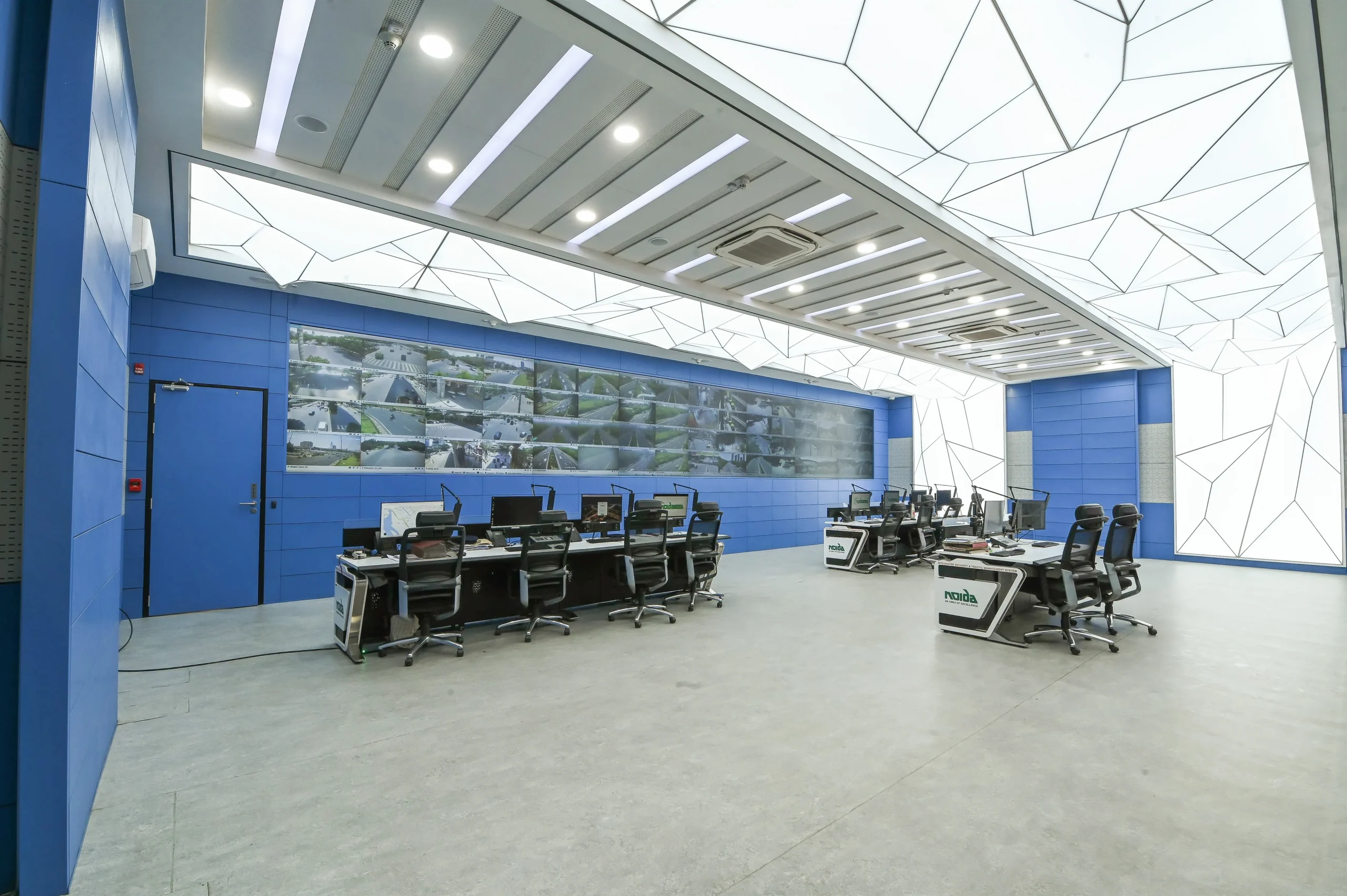
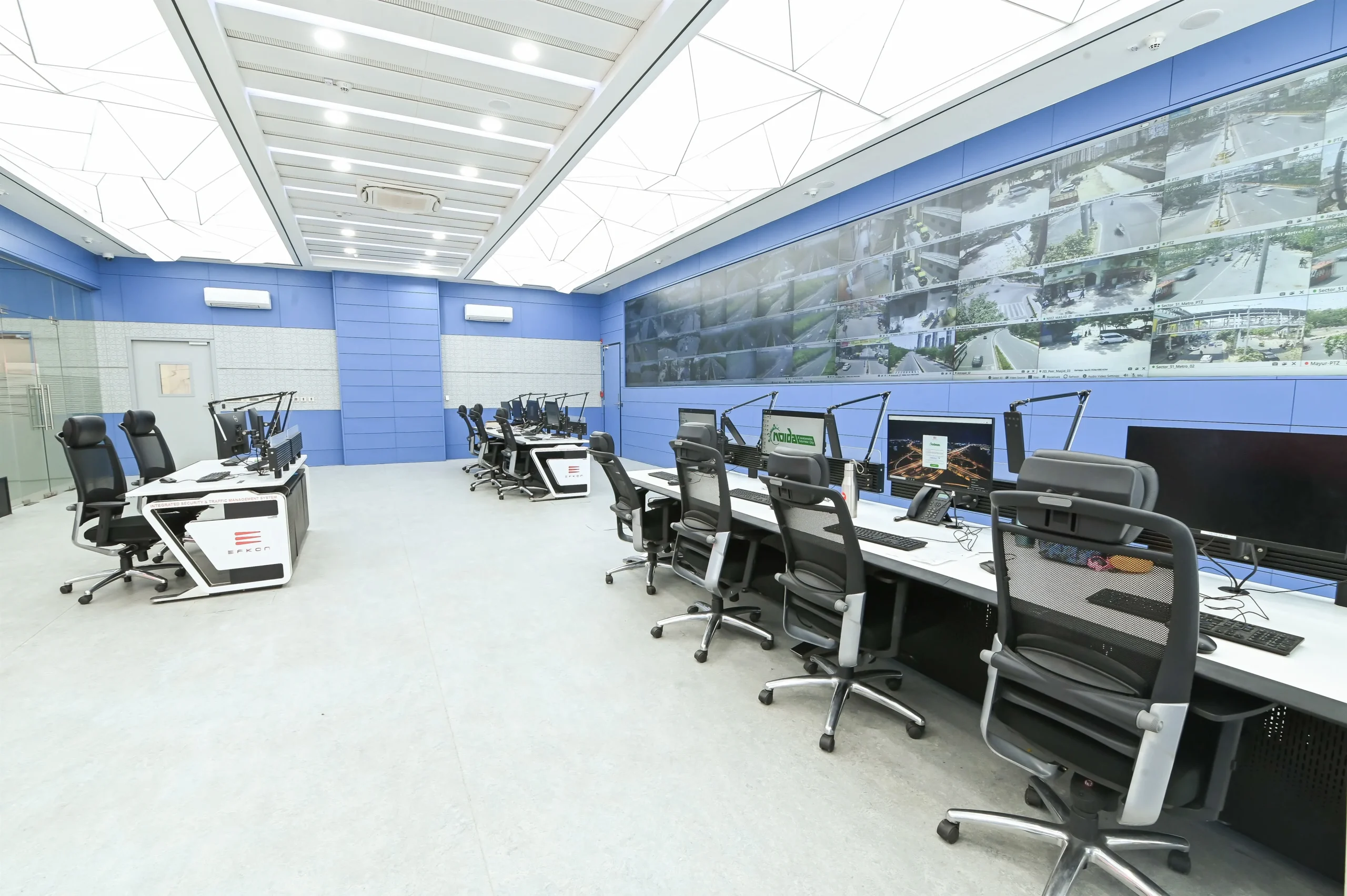
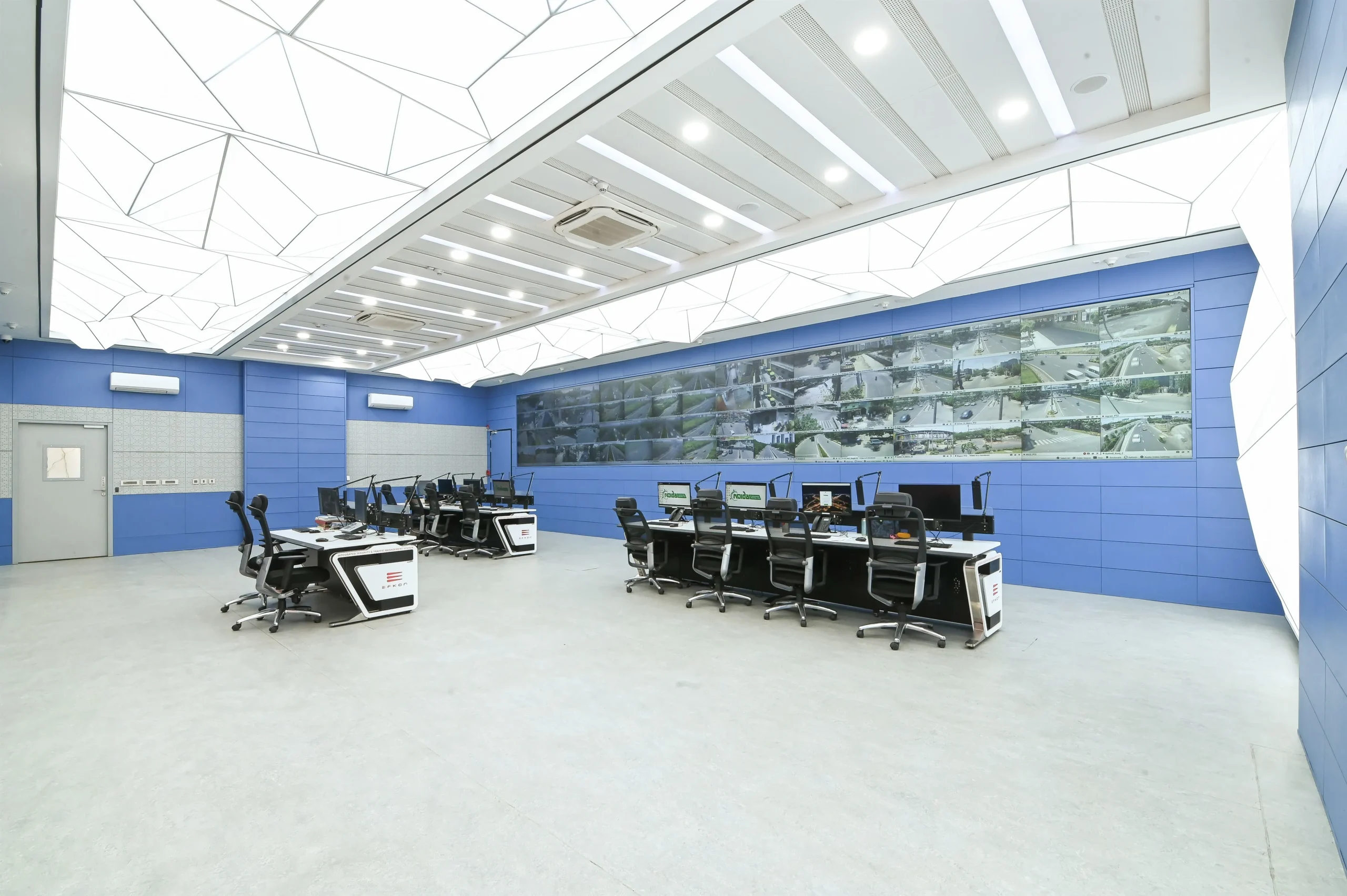
Noida’s Integrated Traffic Management System control room in Sector 94 enables centralized traffic monitoring, automated enforcement and rapid incident support. The system uses 1,065 multi-dimensional cameras at 84 intersections, adaptive traffic signals at 40 major crossings, speed detection at 18 locations, public information screens, panic buttons and command-centre-based video retrieval.

Project Requirement

For the ITMS environment, the client’s requirement was centered on high-frequency screen viewing, fast incident interpretation and coordinated supervisory control. The room had to support continuous observation of traffic feeds, quick response to alarms and smooth staff movement without disturbing seated operators. Special emphasis was required on lighting quality, glare reduction and console placement for prolonged visual engagement.

Scope & Services Provided

Compliance driven ergonomic planning and architectural interior design as per ISO 11064, covering operational zoning, console orientation, line of sight planning, supervisor position assessment, circulation paths, lighting and lux level definition, dimming controls for variable operating conditions and acoustic treatment recommendations.

Benefits of the Services Provided

The key benefit was the creation of a traffic monitoring environment that reduced eye strain, limited repetitive neck and back movement and supported faster cognitive reading of multiple screens. Material and finish selection also helped address low VOC emissions, while the acoustic approach supported concentration and speech intelligibility during active operations.

What Was Achieved

An ergonomically responsive and operationally efficient control room, aligned with the demands of real time traffic management and long duration screen based monitoring, while maintaining functional clarity and a well ordered working environment. By combining task analysis, screen viewing studies, workstation placement logic, lighting and dimming design and iterative review and validation against operational needs and ISO 11064 principles.

How It Was Achieved

By combining task analysis, screen-viewing studies, workstation placement logic, lighting and dimming design, and iterative review and validation against operational needs and ISO 11064 principles.

Project Gallery